
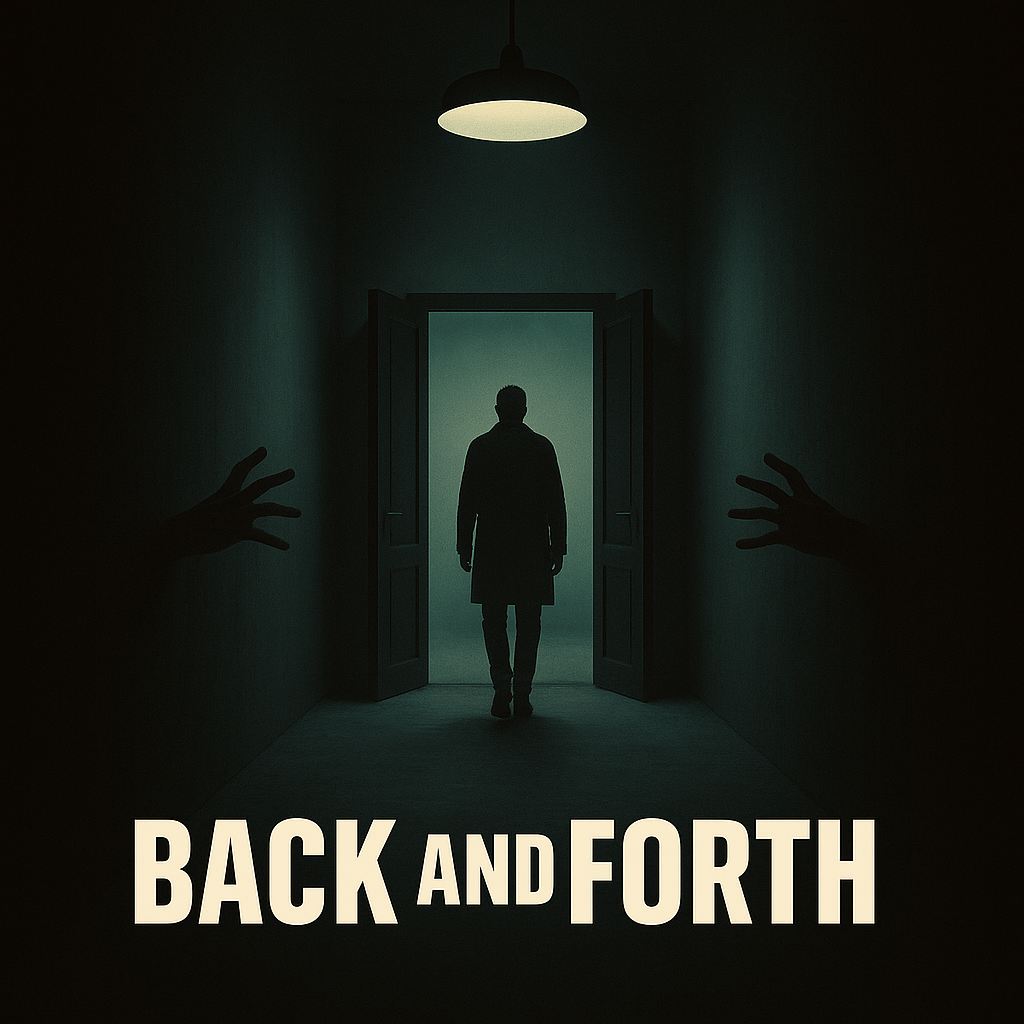
Lately I’ve enjoyed the opportunity AI provides to share my spiritual journey and reflections through songs.
What if the darkness that stalks our faith isn’t loud or violent—but quiet, logical, and unrelenting?
In Back and Forth, that question takes shape in the unsettling image from Job 1:7 and 2:2, where the accuser, Satan, tells God, “I have been roaming throughout the earth, going back and forth on it.”
Add 1 Peter 5:8—“Your enemy the devil prowls around like a roaring lion looking for someone to devour” and a portrait emerges: a patient intelligence that studies, waits, and strikes where trust is already thin.
The Enemy Rarely Kicks the Door In
In Back and Forth, the enemy doesn’t come with claws or chaos but with questions whispered at the worst moments:
- If God were good, would He leave you like this?
- Was He ever really there at all?
- What if your faith is only wishful thinking?
The questions surface not in crisis but in the silence afterward, when grief has frayed the edges of belief, when prayer echoes back empty, when worth already feels fragile.
That’s exactly how the book of Job opens. The accuser doesn’t attack first; he questions motive.
“Of course Job worships You, he’s protected. Take that away and he’ll curse You.”
Satan to God in Job chapter 1
“He Walks Back and Forth”
I have been going back and forth across the earth, wathing everything that’s going on.
Satan (Job 1:7 and 2:2)
That single line from Job unnerves me. It speaks of patience, not panic. Surveillance, not rage. A strategy, not an outburst.
In the song, I describe him as scanning fractures, circling the borders of fear and blessing, cutting at the doorframe instead of breaking the house wide open.
Because that’s often what loss does to faith, it doesn’t shatter it all at once. It erodes it:
- one disappointment
- one unanswered prayer
- one slow silence too heavy to fill
- one private doubt that never finds words
“Back and forth” is more than the enemy’s movement across the earth. It’s the motion inside the mind—between belief and despair, trust and suspicion, belonging and abandonment.
How Doubt Slips In
He bends the truth until it’s thin,
Plants the questions under your skin.
That is how distortion works. The voice rarely denies God outright. It reframes Him as distant instead of near, silent instead of faithful, disappointed instead of tender.
Once that distortion settles, the enemy doesn’t need claws.
He doesn’t need claws if you break from within. He doesn’t need chains if you willingly give in.
Spiritual collapse isn’t usually a loud fall. It’s slow decay—through self-contempt, quiet despair, exhausted prayers, hidden shame. It happens when the whisper begins to sound like reason.

The Wager
The accuser trusts one thing above all: that pain will undo trust. That loss will dim love. That silence will read as abandonment.
It’s the same bet made on Job, on Peter, on every believer who aches in the dark.
Yet, even in ashes, you are more than Satan’s wager. Your failure isn’t your identity. Your questions don’t cancel your belonging. Your wounds don’t make you less His.
Don’t Fall for the Voice
The chorus isn’t meant to sound fearless—it’s meant to sound steadfast:
Don’t fall for the voice that questions your worth.
Because that’s always the target. Not just doubt about God, but doubt about you: about your sincerity, identity, place, and purpose.
Your enemy the devil prowls around like a roaring lion looking for someone to devour.
1 Peter 5:8
Peter’s warning still stands: be alert. The lion that prowls doesn’t always roar—sometimes it waits for isolation; a moment of weakness and vulnerability.
The resistance, then, is quiet faithfulness: choosing again and again to return to truth when lies feel convincing.
Why I Wrote Back and Forth
My long and convoluted journey of deconstruction started that way.
I didn’t write this song to dramatize the devil, but to recognize the pattern.
That subtle voice that slips in. That logic that dresses up despair as realism. That inner accusation that feels so reasonable you start to agree with it.
And I wrote it because I know this much:
- The enemy can roam
- He can whisper
- He can accuse
- But he cannot define you (although he tries very hard to do so)
That’s why the final line matters most:
So rest in the voice that calls you His, not broken.
Not repaired. Not flawless. Just … His.
If the Song Feels Like a Mirror
If Back and Forth resonates with you, maybe it’s because you’ve heard that voice too.
This song isn’t about silencing your questions. It’s about remembering who profits when you stop trusting God.
You don’t need louder faith or stronger defenses.
You need a truth that still stands when everything else feels unstable.
And if you’re in a season of back and forth yourself, hear this now:
- You are not the wager
- You are not the accusation
- You are not the outcome of your worst fear
- You are still held, even when you feel hunted


What do you think?